The 7:45 Shift: How Stoke's Support Acts Turn Early Stragglers Into a Crowd

Photo by Photo by Loris Boulinguez on Unsplash on Unsplash
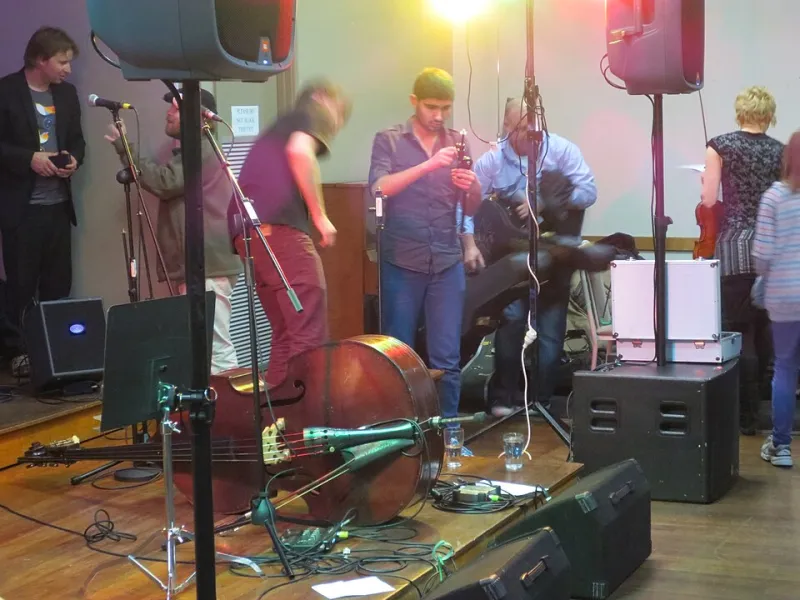
There's a particular sound in a Stoke venue at 7:45pm on a Saturday. It's the clatter of the bar, the rustle of coats going onto pegs, and a support act tuning up to a room that's maybe a third full. The headliner is still two hours away. The lighting desk is still half-asleep. And someone has to stand on that stage and make the next thirty minutes feel like a gig rather than a soundcheck with a paying audience.
That someone is the support act. In Stoke-on-Trent's small rooms — the Sugarmill, the Underground, the Glebe, the Wheatsheaf, the Rigger over in Newcastle — the opening slot is where a lot of local bands learn their trade in public. It's also where bookers decide who gets asked back. And in 2026, with more early-doors shows and all-dayers on the calendar, the support set is doing more work than ever.
The room before the room
A half-empty room isn't a hostile room. It's a distracted one. People are chatting at the bar, checking their phones, waiting for mates. The temptation for a support act is to treat that as a verdict — to shrink, apologise, or play faster out of nerves. The acts that win the room do the opposite. They play to the front few rows, make eye contact, and treat the people who did turn up early like they're the whole crowd.
One trio from Burslem we saw at the Underground earlier this year opened with a stripped-back harmony, no drums, just voices and a guitar. It was a brave move for a room still finding its volume. By the second chorus, the bar had quietened. Not because the band demanded it — because the sound was interesting enough to make people turn around.
That's the first lesson: the first two songs are an invitation, not a warm-up.
Build a set for the stragglers, not the headliner's crowd
Support slots are short. Twenty-five minutes, maybe thirty. You can't build a slow-burn set and hope people stick with you. The acts that do well in Stoke's small venues tend to front-load the set with something immediate — a strong opener, a familiar rhythm, a song that tells the room what kind of night it's in for.
Between-song chat matters more than you'd think. A long story about the van breaking down on the A500 is not the vibe at 8pm. A short, specific line — "We're from Tunstall, this one's about the bus" — is. Mention the headliner once, not five times. Thank the bar staff by name if you can. The crowd notices.
And use the space. If the room is half empty, don't stand in the middle of the stage staring at the back wall. Move to the edge. Play to the people. Invite them forward. A solo performer we saw at the Glebe with a loop pedal spent the first song building a beat, then asked the room to move closer because "it sounds better when you're in it." Half the bar did.
The soundcheck is the first set
You can tell a lot about a support act by how they handle the load-in. The ones who get there early, talk to the sound engineer like a human being, and have a clear tech spec are the ones who get asked back. The ones who turn up at doors, demand a full line check, and then play too loud for the room are the ones who don't.
In Stoke's smaller venues, the sound engineer is often also the person who booked you. They remember. Getting your levels sorted before the doors open means the first song sounds like a song, not a rumble. And it means you can spend your set playing rather than signalling to the desk.
Practical stuff: bring a printed setlist, know your running order, and don't overrun. If you're told you have twenty-five minutes, play twenty-two. The headliner's soundcheck is not your soundcheck.
What bookers actually want
We asked around a few Stoke promoters and venue bookers what makes them rebook a support act. The answers were remarkably consistent. Turn up on time. Be easy to work with. Promote the gig — not just with a Facebook post the night before, but with actual effort. Bring ten people if you can. And play like the room is full, even when it isn't.
The support slot is an audition for the next support slot. It's also an audition for the headline slot in a year or two. The bands that understand that are the ones who end up on the posters.
The economics of the early shift
Nobody gets rich playing support in Stoke. Fuel, parking, a couple of drinks — it adds up. So the merch table matters. A QR code for your mailing list matters. A handful of CDs or cassettes in a box matters. Not because you'll sell a fortune at 8:15pm, but because the people who did turn up early are the ones most likely to buy something.
Talk to them afterwards. Not with a hard sell — just a hello. The half-empty room is a conversation starter. The person who watched your set from the bar might be the person who comes to your headline show in six months.
Turning the early arrivals into fans
There's a quiet civic thing happening in these rooms. The support act is part of the ecosystem that keeps Stoke's music scene alive. The headliner gets the noise and the encore. The support act gets the room before the room — the thirty people who chose to come out early, who trusted the bill, who stood near the front when there was no crowd to hide in.
Win them over and you've done the hardest job of the night. The rest is just turning up.
In 2026, with more early-doors gigs and matinee shows on the calendar, that job is only getting more important. So here's to the 7:45 shift. The ones playing to the coats on pegs. The ones who make the room before the headliner does.