Getting Home Is Part of the Setlist: Stoke's Late-Night Gig Transport Guide
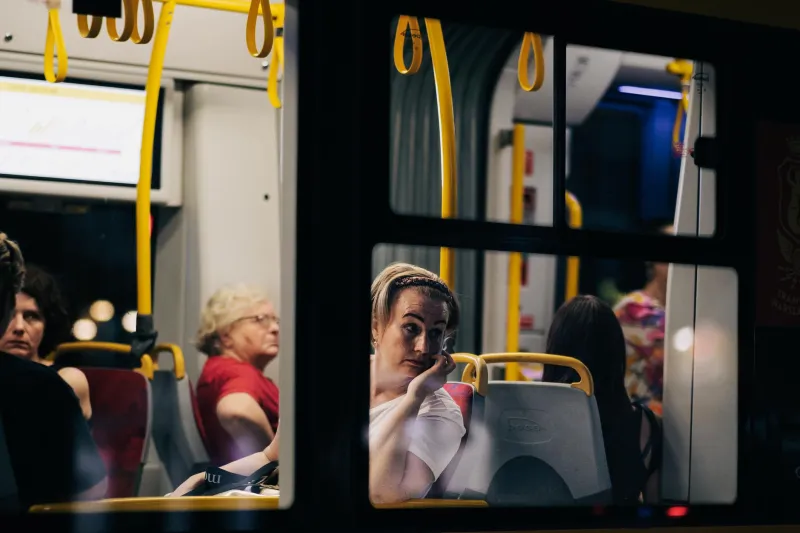
On a Saturday night in Hanley, the last bus is not a footnote. It is the thing that decides whether the encore is worth staying for. Ask anyone who has stood at the back of a gig calculating the walk to the bus station against the chance of one more song, and they will tell you: the setlist starts before doors and ends when the key goes in the front door.
That might sound like a small practical detail. It is not. In a city spread across six towns, with venues tucked into town centres, pub back rooms and campus buildings, transport shapes the crowd. It shapes the bill. It shapes whether a promoter can risk a 10pm headline slot or has to aim for an early finish so the last handful of gig-goers can scatter home.
The 10.45pm question
Spend a few weeks around Stoke's gigs and the same question keeps coming up: how are people getting back? A promoter in Hanley puts it plainly — they now publish stage times earlier and more clearly than they used to, not because the bands demand it but because the audience does. A venue manager in Burslem says the difference between a 10.15pm finish and an 11pm finish can be the difference between a busy room and a half-empty one. Passengers on the last buses out of Hanley talk about gigs in the same breath as timetables. Did you stay for the whole set? Could you get the bus? Was it worth the taxi?
This is not a complaint about late licences or lazy audiences. It is a picture of a music scene doing its best with the transport it has. And in 2026, that transport is patchy after dark. Many last departures from Hanley cluster around the late evening, with some routes finishing earlier than others. Sunday and midweek services can be thinner still. Timetables change, so the golden rule is simple: check the operator's live information before you travel, not the poster in the venue window.
Venue-to-bus combinations that work
Start with the Hanley cluster. The Sugarmill, Victoria Hall and the Regent Theatre all sit within a short walk of Hanley bus station, which makes them the most straightforward late-night options. A five-to-ten-minute walk gets you from the venue door to the stands. From there, routes head out towards Burslem, Tunstall, Longton, Stoke and Newcastle-under-Lyme. The bus station also has a taxi rank, which matters when the last bus has gone and the encore ran long.
Burslem is a different puzzle. Its pub venues and community rooms have a proper local feel, and the walk back into Hanley is doable for some, but it is not a stroll to be casual about at midnight. If you are relying on a bus, build in a buffer. A gig that finishes at 10.30pm is not the same as a gig that finishes at 10.55pm. The same goes for Longton and Stoke: the rail station is useful in daylight, but late trains are not a reliable gig plan. Buses and taxis do the heavy lifting.
For Keele and Newcastle-under-Lyme, the Hanley–Newcastle corridor is the backbone. Campus venues and town-centre pubs can work well if you are heading back towards Hanley or Newcastle, but the later it gets, the more you need a plan B. Leek's Foxlowe Arts Centre is a brilliant room with a very different geography: a great night out, but one where car sharing and pre-booked taxis are part of the deal, not an afterthought.
The 20-minute rule
Walking is part of the map too. Hanley to Stoke station is roughly a 20-to-25-minute walk depending on your pace and which end of town you start from. Hanley to Burslem is longer. These are not impossible distances, but they are not the same as stepping out of a London venue into a night bus every five minutes. The practical answer is the 20-minute rule: if your walk is longer than 20 minutes, decide now whether you are doing it in a group, booking a taxi, or leaving early enough for the bus.
Groups matter. A shared taxi is often cheaper than four separate bus fares and a long wait. Venue staff are usually good at helping people pair up for taxis if you ask at the bar before the lights go up. Promoters can help too by publishing a simple transport note alongside the stage times: nearest bus stop, last departures, taxi rank, walking route. It is not glamorous. It is useful.
Transport is music infrastructure
The bigger argument is this: buses, taxis and safe walking routes are not adjacent to the music scene. They are part of it. A city that wants a night-time economy built on culture, not just closing time, has to think about how people move through it after dark. That means later buses on event nights, clearer travel information from venues, and promoters feeling confident enough to book the headline slot without worrying that the room will empty at 10.30pm.
It also means audiences being honest about what they need. If the last bus is the deciding factor, say so. Promoters listen. Venues listen. The awkward truth is that Stoke's gig map is already being redrawn by transport, whether anyone calls it that or not. The best rooms are the ones that accept it and plan around it.
So yes, stay for the encore. Just know your route home before the first song starts. In Stoke in 2026, getting home is part of the setlist.