The Door That Sticks: Loading In at Stoke's Tightest Rooms
There's a moment, somewhere around ten past six on a wet Tuesday, when a gig in Stoke-on-Trent either happens or it doesn't. The van is on the double yellows outside a 150-cap room off Brunswick Street, hazards ticking, and the drummer is standing in the gap between a wing mirror and a wheelie bin holding a kick drum and doing sums. The gap is 62 centimetres. The drum case is 64.
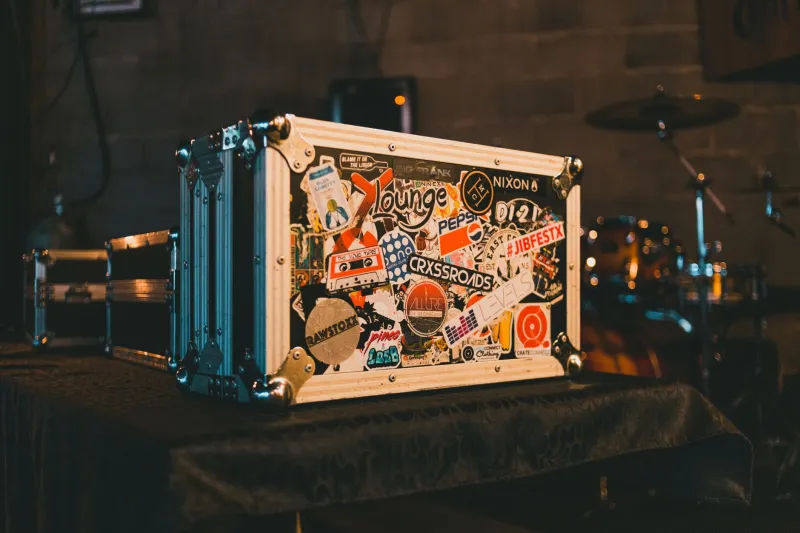
What happens next is the bit nobody puts on the poster. Not the band, not the poster, not the ticket. The load-in: the unglamorous, occasionally comedic, always collaborative business of moving a van's worth of gear through a door that was designed in about 1904 for a different century entirely.
The gap, the step, the door that sticks
Stoke's smaller rooms weren't built for touring. A room above a pub on Trinity Street has a staircase that turns twice and a ceiling beam that has taken more headstock chips than any stage in the city. The old bank building with the big windows has a front door that looks generous until you realise the lobby narrows by a third. The venue on the corner near the bus station has a back door that swells in the damp and needs a shoulder, a wedge of wood and a specific member of staff who knows the trick.
Ask any promoter who's been at it a while and they'll tell you the same thing: the door is the gig. Get through the door and you're 80 per cent there. The rest is stairs.
If you're new to putting a night on, the single most useful thing you can do is ring the venue and ask four questions. How wide is the load-in door? Is there a step, a lip, or a ramp? Where can a van legally stop, and for how long? And is there anyone on site from, say, five o'clock who can hold a door? That last one sounds trivial. It is not. A door held open by a person is worth ten doorstops and a lot of goodwill.
Yellow lines, bin day and the neighbours
The parking is its own sub-genre. Hanley's one-way system and the run down to Potteries Way can turn a three-minute hop into a twelve-minute loop, and the loading bays that look empty at 4pm are full of delivery vans by half five. Double yellows mean what they say, even when the hazards are on and you're only going to be "literally two minutes" — which, with a drum kit, a bass rig and a merch bin, is never two minutes.
Practical sorts do three things. They check the council's parking rules for the street before the day, not after the ticket appears. They budget a few quid for a proper car park and use a trolley for the last stretch. And they ask the venue which day the bins go out, because a neatly stacked pile of black bags in the alley is the difference between a clean run and a game of kerbside Tetris at half six.
Then there's the neighbours. Flats above venues are a fact of Stoke life now, and a bit of consideration goes a long way: no revving, no shouting up at the promoter's window, no stacking cases against someone's front door. The venues that survive are the ones that keep the street on side, and that starts with the load-in.
The stairs are part of the setlist
Climbing is underrated as a gig skill. A flight of stairs with a 4x12 is a different kind of fitness, and the smart money goes on two people per heavy case rather than one hero per flight. Bring gloves. Bring a torch for the back corridor where the bulb has been out since the summer. Bring a roll of gaffer tape, because the sticky door, the wobbly handrail and the cable run across the threshold all want a bit of it.
And bring a running order you can actually read. The sound tech — the person who will decide whether your night sounds like a night or like a bin bag in a wind tunnel — needs to know who's on when, who's sharing a kick drum, and which band is bringing the mystery DI box. Hand them a printed sheet and you've bought yourself a friend for the evening.
Who to ask, and what to bring
A short load-in kit, learned the hard way in rooms from Burslem to Longton: a trolley, two straps, gloves, a torch, gaffer tape, a wooden wedge, a sharpie, a printed running order, and cash for parking. Add a bin bag for the wet coats and a towel for the rain that always seems to arrive exactly as the bass amp comes out.
Ask the venue manager which door they'd use. Ask the sound tech what time they want you in. Ask whether there's a lift, a ramp or a step — and if the answer is a laugh, plan accordingly.
Load-out is the second gig
Half eleven, the room's emptying, and the same door is waiting. The stairs haven't got any shorter. The wheelie bin has moved, because of course it has. Somebody's got a train at half six, somebody else is driving back to Derby, and the merch float still needs counting.
But there's a quiet bit of satisfaction in it too. The van packed properly, the door wedged shut, the promoter doing the sums on a phone torch. Another Stoke night, got on and got off, through a gap two centimetres too narrow, with a bit of help from people who've done it a hundred times before.
The back door isn't the glamorous end of live music. It's just the end that makes the rest of it possible.