Ask Before You Go: A Gig-Goer's Accessibility Checklist for Stoke's Small Venues

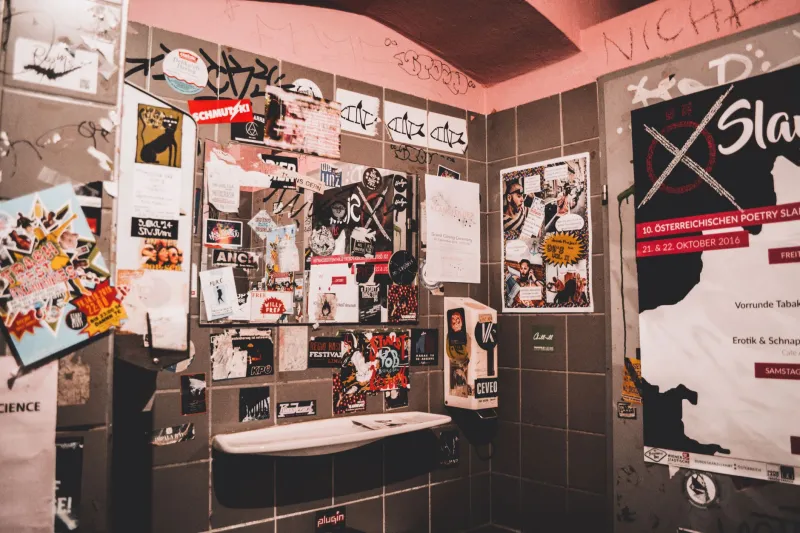
Photo: Wikiwheels93, CC BY-SA 4.0, via Wikimedia Commons
The Sugarmill's floor slopes. The Underground is, as the name suggests, underground. The Rigger's live room involves a set of stairs that a lot of people don't clock until they're halfway up them. None of this is a scandal. It's the shape of a city whose music venues were built for a different century, and of a scene that has spent the last few years working out what to do about it.
Some of it has been fixed. Some of it is one phone call away. And some of it, frankly, is still down to you asking the right question before you spend £14 on a ticket.
Why this is worth an opinion column in 2026
Access information in Stoke is uneven. One promoter will put step-free access, a companion ticket policy and a quiet-space note in the event description. The next will write "doors 7pm" and nothing else. Neither is being malicious — small venues are run by three people who are also doing the sound and the bar. But the effect is that disabled gig-goers in this city do unpaid research every single time they fancy a night out.
That isn't good enough for a city that wants a night-time economy built on culture rather than closing times.
The five questions to send before you buy
- Which entrance will actually be open, and is it step-free? Venues often have a flat back door that nobody thinks to mention.
- Where is the accessible toilet, and will it be unlocked and clear? "We have one" and "you can use it" are different sentences.
- Is there a raised or reserved viewing area, and can I book a space? Ask about companion tickets in the same email.
- What will the lighting do? Strobe, haze, sudden blackouts and video walls all matter if you're photosensitive or prone to migraine.
- Is there somewhere I can go if I need to leave the room? A foyer, a side bar, a corridor with a chair.
Bonus question: can I get back in if I step out mid-set? Some venues stamp hands. Some don't.
How to ask so you get a real answer
Email the venue or the promoter rather than DM-ing the band. Do it at least a week out. Ask for the duty manager's name and request that your requirements are noted on the door list. Keep the reply. If a venue can't put an answer in writing, that is itself information.
Tickets: the bit that catches people out
Companion and essential-carer tickets are common but rarely advertised. Ask the box office directly instead of assuming the online checkout will offer it. If you use an Access Card or a similar proof-of-disability scheme, say so in the email. And if you're buying through a resale site, check the venue will honour the access arrangement attached to the original booking — some won't.
The rooms, and what to check in each
The Sugarmill, Hanley. A proper rock room with a sloped floor — great for sightlines, awkward for wheels. Ask about the entrance in use on the night, where the accessible toilet sits, and whether a spot at the side of stage can be reserved.
The Underground, Hanley. Basement venue: stairs, low ceilings, loud. If stairs are the barrier, ask whether any of their programme happens at street level.
The Rigger, Marsh Street. Beloved, scruffy and multi-level. Ask specifically about the room the gig is in, not the building in general.
The Leopard, Burslem. A pub with a gig room, which means the access is really the pub's access. Worth a phone call rather than an email.
Mitchell Arts Centre, Hanley. The likeliest of the city's rooms to have a formal accessible seating plan. Talk to the box office and ask them to hold seats rather than picking blind from an online plan.
The Potteries Museum & Art Gallery. Flat, lifts, wide doors, and increasingly used for daytime and early-evening events. A good entry point if big dark rooms aren't your thing.
Keele and Staffordshire University venues. Campus buildings are usually the most compliant in the city, but the room matters more than the campus — ask which space, and whether the accessible route stays open after 8pm.
Treat any answer older than the last refurbishment as out of date.
Getting there and getting home
Hanley bus station is a step-free walk from the Cultural Quarter, though the route has a couple of slopes. Taxis can drop closer than buses; agree a pick-up point that isn't the middle of a one-way system. Blue Badge parking in Hanley is thin on a Saturday night. And if you need to leave before the encore, know your last bus before you go in — late-night transport out of the city is still the weakest link in the chain.
On the night
Arrive early enough to talk to door staff without a queue breathing down your neck. Ask them to point out the quiet space and the accessible loo. Bring ear defenders if you need them; plenty of small venues sell them now, but not reliably. Tell whoever you're with where you'll be if you step out.
If it goes wrong
Ask for the duty manager, not the door steward, and be specific: what you asked for, what happened. Follow it up by email. If it's a serious failure, the council's licensing team is the body with actual leverage, and promoters care about reputation in a city this size. Then tell them what worked, too. Praise is cheaper than a complaint and it moves venues faster.
Access isn't a favour bolted on at the end of a booking. It's part of the booking. The promoters and rooms that already understand that are the ones worth your money in 2026 — and the ones still treating it as an afterthought should hear about it.