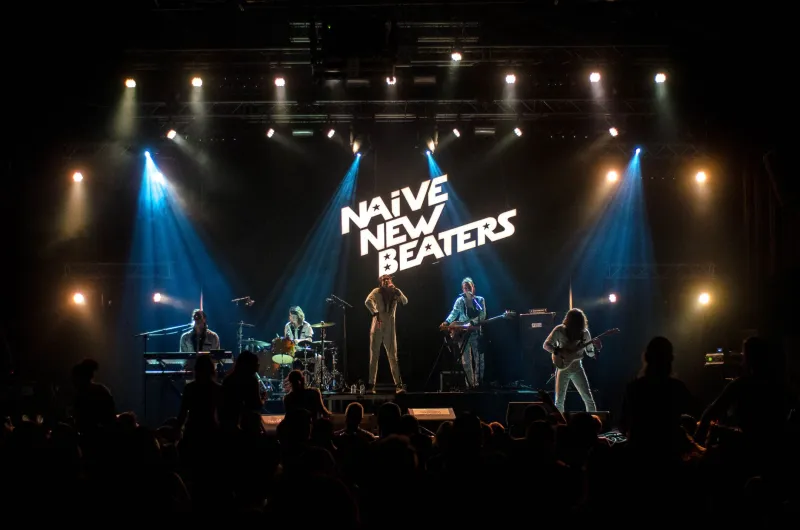
After Last Orders: Build Stoke's Night-Time Economy on Culture, Not Just Closing Time
Photo: Jonathan Hutchins , CC BY-SA 2.0, via Wikimedia Commons
There is a version of Stoke-on-Trent's night-time economy that fits neatly on a council slide. More late licences. More bars. More footfall. A city centre that stays open past 9pm and looks, from a distance, like every other city centre in the country. It is a tidy vision. It is also a trap.
In 2026, as regeneration plans take shape and the city talks again about how to bring people back into Hanley after dark, we risk repeating a very old mistake. We are counting closing times when we should be counting culture. We are asking how many venues can sell alcohol when we should be asking how many rooms can host a band, a DJ, a poet, a rehearsal, a club night or a first gig.
A night-time economy built only on bars is fragile. It depends on drink spend, weather, student numbers and the whims of national chains. A night-time economy built on culture is different. It gives people a reason to travel into the city, not just a place to stand once they are there. It creates jobs for sound engineers, promoters, designers, door staff, photographers and merch sellers. It makes a city feel like itself.
We have been here before
The Golden Torch in Tunstall is the classic example. A soul club that drew people from across the country, it closed in 1973 and is now remembered mostly as music history. It is also planning history. The city had something internationally significant, and then it did not. That story has been repeated in smaller ways ever since, in venues that became shops, car parks or flats, and in scenes that moved online because there was nowhere left to play.
The Sugarmill remains a beacon. The Victoria Hall still pulls in the big names. The Regent Theatre and the new cultural spaces have their role. But one or two anchor venues cannot carry a city's night-time culture on their own. They need a middle layer: the 50-cap rooms, the pub back rooms, the social clubs, the rehearsal studios and the DIY spaces where scenes are made.
The energy is already here
What is frustrating about the current debate is that Stoke-on-Trent already has the raw material. The city's DIY promoters are putting on festivals and weekender events with borrowed PA systems and sheer nerve. Micro-venues are selling out 40-cap rooms. All-ages matinees are drawing families back into Hanley. Local bands are touring again, not because the infrastructure is perfect, but because they have stopped waiting for it to be.
That energy is an asset. It is also easy to crush. A single licensing condition, a rent increase, a noise complaint or a landlord's change of heart can wipe out a space that took years to build. If the city's 2026 plans do not actively protect that layer, they will be building a night-time economy on sand.
A culture-first manifesto for the Potteries after dark
This is not an argument against bars. Pubs and clubs are part of the ecosystem. But they cannot be the whole plan. Here is what a culture-first night-time strategy would look like.
1. Map and protect grassroots spaces
The city needs a live cultural infrastructure audit, not just a licensing review. Count the rooms that host music, comedy, theatre and club culture, including the unofficial ones. Use planning powers, agent-of-change principles and Asset of Community Value listings to give them a fighting chance. Offer business rates relief where the cultural output is genuine.
2. Put culture into licensing
Late licences should not be handed out as a reward for simply staying open. They should support venues that programme live work, train staff properly and work with residents. A venue that hosts three bands a week is doing something different from a bar with a playlist. The policy should recognise that difference.
3. Fund promoters, not just buildings
A small grants scheme for promoters, equipment libraries and affordable rehearsal space would go further than another piece of consultancy. The people who run DIY nights are often the same people who will run the city's festivals in five years. Fund them now.
4. Fix the last mile
A night out is only as good as the journey home. Later buses, safer walking routes, clearly signed taxi ranks and better lighting are not glamorous. They are essential. If people cannot get home from a gig in Burslem or Longton without a expensive taxi, the city centre's night-time economy will stay small.
5. Write culture into every regeneration scheme
Any new development in Hanley, Etruria or the surrounding areas should include space for culture, not just retail and flats. That could mean a community room, a rehearsal studio, a small performance space or a meanwhile-use agreement for an empty unit. Culture should be a condition of regeneration, not an afterthought.
6. Make all-ages and accessibility standard
The next generation of gig-goers is in school now. If every venue is 18-plus after 9pm, we are telling them that live music is not for them. All-ages matinees, accessible stages, clear information and affordable tickets should be part of the city's cultural offer, not a niche add-on.
The choice for 2026
Stoke-on-Trent can choose a night-time economy that looks good in a press release but feels empty on a Tuesday. Or it can choose one that is built on the thing the city has always been good at: making culture in small rooms with limited resources and a lot of stubbornness.
The bars will follow the culture. They always do. But if we get the order wrong, we will end up with more places to drink and fewer reasons to go out. That is not regeneration. That is just closing time with better lighting.